In the spring of 2023, I unexpectedly found myself driving back and forth from my home in Sebastopol, California, to San Rafael, where one of my younger brothers was being hospitalized nearby. Each time I took the hospital freeway exit, signs directing drivers to Dominican University of California beckoned to me.
I was already deep into writing my memoir about growing up with my disabled foster and adoptive siblings and experiencing my own chronic pain and illness disabilities. Yet I struggled to make the disparate parts of my writing cohere into a relatable and resonant narrative. I knew there were important layers of understanding my craft—and myself—that I needed to break through, but I was alone without a writing community and mentors to guide me.
My previous MA in disability studies gave me an academic framework of the political aspects of disability, but the MFA program at Dominican offered something different: a place to tell my story. I had heard about the narrative medicine track in the MFA program, and seeing “Dominican University” announced every time I went to the hospital felt like a literal sign to apply. Following that sign to begin my Dominican MFA degree in the narrative medicine track has been one of the best decisions of my life.
As Joan Baranow, who founded Dominican’s MFA program in June 2017 described, the initial conception of the narrative medicine track was to help students “contemplate the differences between being cured and being healed of disease, and what roles science, arts, and humanities play in the process of healing.” This focus aligns with the original aims of narrative medicine, which was established as an academic discipline by physician Dr. Rita Charon at Columbia University in the 1990s, to use health humanities like literature and the arts to enhance health and medical professionals’ capacities for deep listening, reflection, and empathizing.
Narrative medicine has since grown to include patients and nonmedical caregivers, but it continues to center medical model conceptions of health, illness, healing, and disability. The medical model of disability—what those of us in Europe, the Americas, and many other colonized regions are most accustomed to—emphasizes “curing” or “fixing” people to make them conform to biomedical standards of normalcy. These objectives frequently omit or contradict the best interests of the person or people who have the most lived experience with, and likely superior understanding of, their conditions.
In contrast, disability studies centers the experiences of disabled, chronically ill, neurodivergent, d/Deaf, and mad or mentally ill people. Disabled people are assumed to be the authorities on their experiences, and disability is largely conceived of as a social phenomenon that results from structural and attitudinal barriers—what is referred to as the social model of disability. According to the social model, these barriers are the problems to be corrected, and not disabled people or their embodied differences.
Because narrative medicine is entwined with the medical model, it can be at odds with the aims of disability studies and social model imperatives of disability rights. However, both narrative medicine and disability studies offer important lenses for cultivating a deeper understanding of how concepts of health, illness, healing, and disability are constructed. Narrative medicine is also continually evolving through programs such as Dominican’s narrative medicine MFA track that uses writing and literary studies to inquire into the complexities of how our embodied experiences shape our lives and vice versa.
Faculty member Claudia Morales, a novelist with medical anthropology expertise, explains that studying narrative medicine, “allows MFA students to relate their writing praxis to the concept of embodiment, positioning the body as a vital locus of dialectical interaction with cultural and societal constructions. This focus is not only valuable for students exploring the intersections of writing and illness but also essential for writers more broadly, as it allows writers to deconstruct and imagine endless possibilities from their own bodies and beings.”
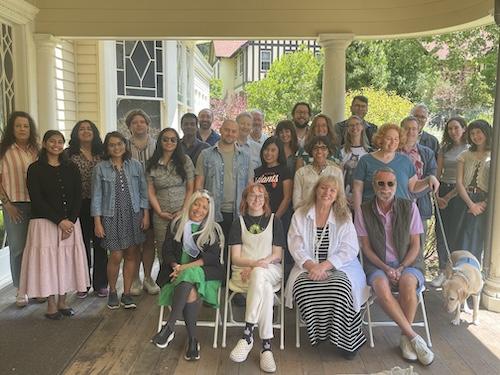
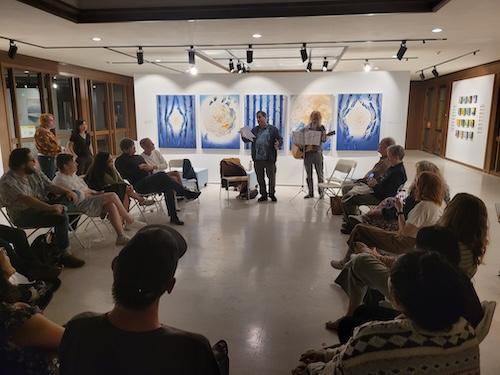
Working with wonderful MFA mentors like Claudia Morales has helped me attune to the nuances of my story to push traditional boundaries of how bodies and bodily experiences are understood and represented, such as cross-cultural concepts of the body and the ways in which bodies are experienced, assessed, and valued. Other faculty such as Iris Jamahl Dunkle and Marianne Rogoff have also guided me to hone my craft skills to meaningfully convey my story.
Whether a student’s focus is poetry, fiction, or creative nonfiction, the individualized format of Dominican’s MFA means that the content of narrative medicine studies will be tailored to the student’s goals and interests. For me, this means incorporating discussions of queer, transgender, and intersex rights; racial and economic justice; and constructs of normativity, ability, and disability. Other students have focused on experiences of cancer, trauma, mental health conditions, being military veterans, and working within the medical field.
It was a wonderful day when, after three months, my brother recovered enough from the bone and blood infection he was hospitalized for to come home. As relieved as I am that he is doing well and we are past that difficult experience, I am grateful the Dominican sign was put in my path—and that I said yes to following it.
Ma’ayan Simon is a disability studies scholar and writer working on a memoir about growing up with disabled foster and adoptive siblings and having her chronic pain dismissed. She is in the last semester of completing her MFA at Dominican University focused on nonfiction and narrative medicine. Simon loves taking walks with her service dog, Buffy, and is passionate about dismantling chronic pain, illness, and disability stigmas. For more about Simon, please visit UnshamePain.com.